

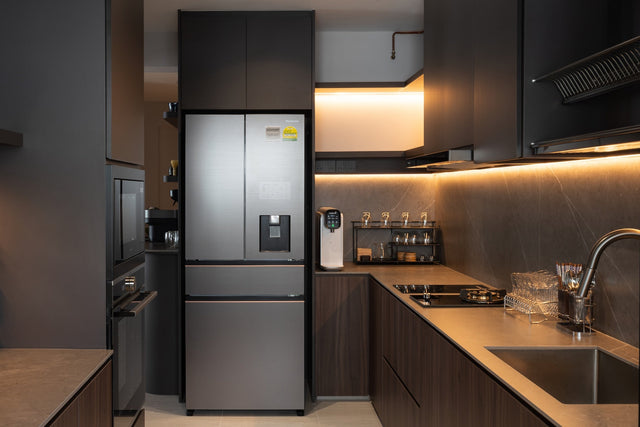
Few lighting features change the feel of a room as quickly as a well-placed cove. A soft line of light washing across a ceiling makes an HDB living room feel taller, a condo bedroom feel calmer, and a feature wall look intentional rather than improvised. Cove lighting ceiling designs have become one of the most requested features in Singapore renovations, but they only look good when the strip, the cove detail and the colour temperature are planned together. This guide walks through how to use LED cove light strips at home, where to place them, and what to confirm before you order.
What Is Cove Lighting
Cove lighting is indirect lighting hidden inside a recess, ledge or pelmet, usually built into a false ceiling. Instead of shining straight down, the light bounces off the ceiling or wall, creating a gentle glow with no visible light source. In most homes, the light source is an LED strip laid inside the cove channel built by your carpenter or false ceiling contractor.
Because the light is indirect, cove lighting is best treated as ambient or mood lighting rather than your main source of task light. It pairs naturally with downlights: the cove sets the atmosphere, and the downlights provide practical brightness when you need it. Our article on the layering led cove lighting with task and ambient light explains how these roles fit together.
Popular Places to Use Cove Lighting
Living Room False Ceiling
The classic application is a perimeter cove around the living room false ceiling. It lifts the ceiling visually and gives you a relaxing evening setting without switching on every downlight. In many BTO flats, a cove along the length of the living and dining area also helps tie the open-plan space together.
Bedroom Headboard and Ceiling
In bedrooms, a cove above or behind the headboard creates a soft glow that is far more comfortable than an overhead light before sleep. A warm colour temperature works best here.
TV Feature Wall
A strip hidden behind or above a TV console or feature panel reduces the harsh contrast between a bright screen and a dark wall, which many people find easier on the eyes when watching in the evening.
Kitchen Cabinets and Shelving
Although not a ceiling cove, the same LED strips work well under kitchen cabinets and inside display shelving, adding practical light to worktops and highlighting open shelves.
COB Strip Light vs Standard SMD Strips
The type of LED strip you use makes a visible difference. Traditional SMD strips have individual LED chips spaced along the strip. When the cove is shallow or the strip is visible from certain angles, these chips can appear as a row of bright dots, sometimes called "hotspots".
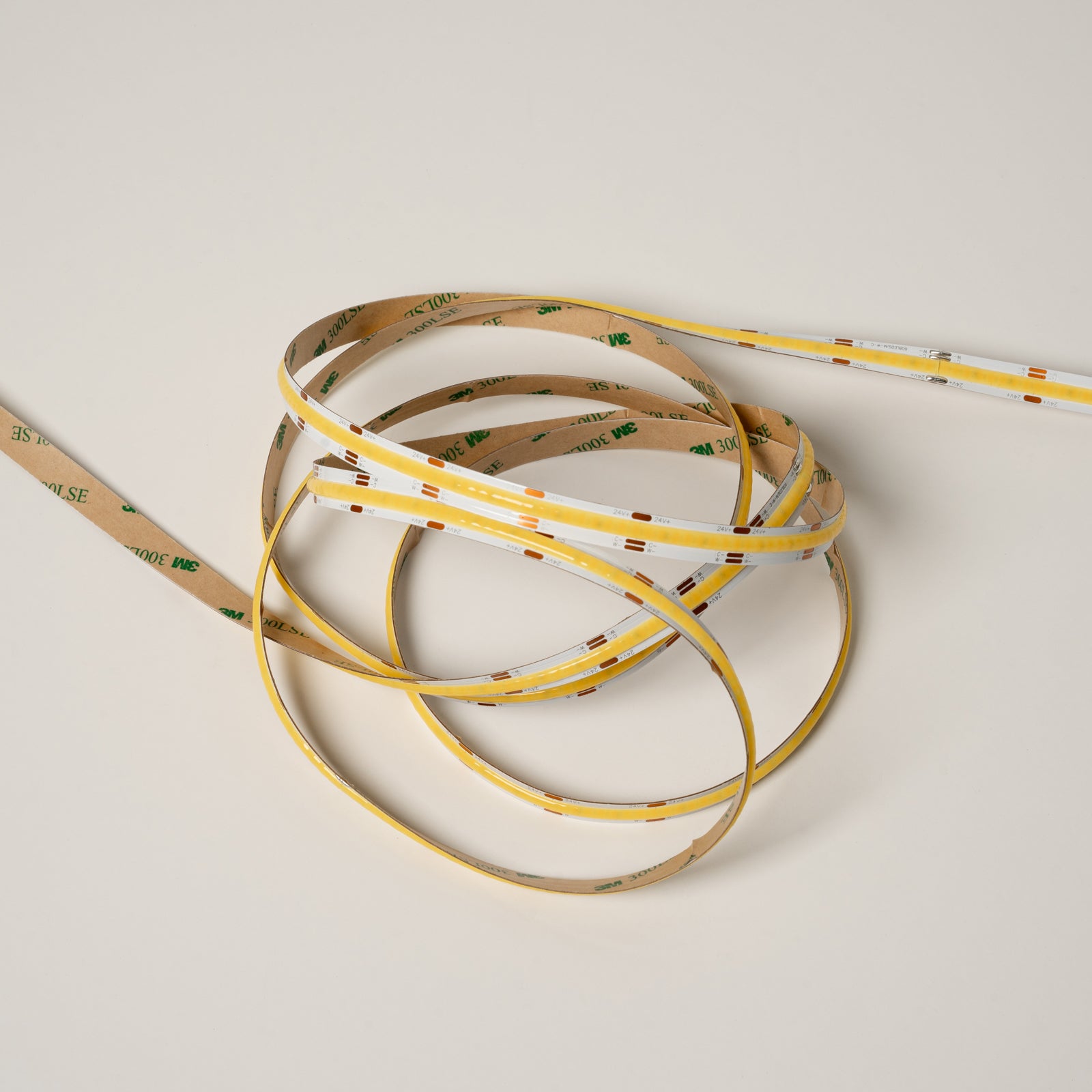
A COB strip light, short for chip-on-board, places the LEDs so densely that the strip produces a continuous, even line of light with no visible dots. For led cove light strip applications in Singapore homes, where coves are often shallow to save ceiling height, COB strips give a noticeably smoother finish.
The COB Lightstrip is 8mm wide and delivers around 1,000 lumens per metre. It comes in 3000K, 3500K, 4000K or 6500K, and can be ordered in customised lengths. Cutting and soldering are included with every purchase, so it can be prepared to fit your cove runs. Note that an LED driver is required and is purchased separately.
Choosing Colour Temperature for Cove Lighting
Warm White (3000K)
Warm white is the most popular choice for cove lighting in living rooms and bedrooms. It creates a cosy, hotel-like atmosphere and complements wood finishes and warm neutrals.
Warm Neutral (3500K)
3500K sits between warm white and neutral white, and is a good middle-ground option for homeowners who find 3000K too yellow but 4000K too stark for a cove. It keeps a touch of warmth while rendering colours a little more accurately than 3000K, which suits living rooms with mixed wood and lighter finishes where you want the cove to feel inviting without skewing the room too amber.
Neutral White (4000K)
Neutral white suits modern, minimalist interiors with grey, white or concrete-look finishes. It feels clean without being clinical.
Cool Daylight (6500K)
Cool daylight is rarely used for mood coves but can work for under-cabinet task lighting in kitchens or study areas.
Whatever you choose, keep the cove colour temperature consistent with the downlights in the same room, or the difference will be obvious. Our guide to COB strip light colour temperatures covers this in more depth.
How Bright Should Your Cove Be
Brightness is measured in lumens per metre. For indirect ceiling coves, a strip delivering around 1,000 lumens per metre is generally enough for a noticeable ambient glow, especially with light-coloured ceilings that reflect well. If you want the cove to be dimmable for evening use, confirm that your LED driver and switch are compatible with dimming before installation.
LED strips are also one of the most energy-efficient ways to add ambient light. The U.S. Department of Energy notes that LEDs use up to 90% less energy than traditional incandescent bulbs, and since 2023 Singapore has required that light bulbs sold here meet at least LED-level efficiency, according to the National Environment Agency.
What to Confirm Before You Order
Cove lighting depends on coordination between your lighting supplier, carpenter and electrician, so confirm a few details early. Have your ID or electrician measure the lenght required for each space, so that you can simply submit to your vendor for a quotation. If cove lighting is part of a whole-home plan, BTO Lighting Package Guide: How to Plan and Budget Lighting for Your New HDB Home explains how to budget it alongside everything else.
Frequently Asked Questions
Is cove lighting enough to light a whole room?
Usually not when they are running along the sides of the room. Cove lighting is indirect ambient light. Most rooms still need downlights or a ceiling light for everyday brightness and tasks.
Why can I see dots of light in my cove?
That usually happens with SMD strips in shallow coves. A COB strip light produces a continuous line of light and avoids visible dots.
Can LED cove light strips be dimmed?
Yes, if you opt for a "dimmable LED driver" and use it with a dimmer switch.
Alternatively you can opt for smart or remote control configuration to dim it
What colour temperature is best for bedroom cove lighting?
Warm white at around 3000K is the most common choice because it feels relaxing and suits evening use.
Do I need a false ceiling for cove lighting?
A ceiling cove typically needs a false ceiling or built-in ledge. Without one, you can still use LED strips behind headboards, TV panels or under cabinets.
Cove lighting ceiling designs are one of the simplest ways to add warmth and depth to an HDB flat or condo, as long as the strip type, colour temperature and cove detail are planned together. COB strips give the smooth, dot-free finish that makes coves look professionally done. Visit Northstar Lighting to see our lightstrips in person, bring your floor plan for a 1-to-1 consultation, and explore our cove lighting ceiling range online.
References
1. U.S. Department of Energy. (2026). Lighting Choices to Save You Money. Energy Saver. https://www.energy.gov/energysaver/lighting-choices-save-you-money
2. National Environment Agency. (2018). All Light Bulbs Sold In S'pore To Be Minimally Of LED Efficiency Level From 2023. NEA. https://www.nea.gov.sg/media/news/news/index/all-light-bulbs-sold-in-s-pore-to-be-minimally-of-led-efficiency-level-from-2023
3. Energy Market Authority. (2026). Who Should I Engage To Assist With My Electrical Works? EMA. https://ema.gov.sg/resources/faqs/electricity/general-electricity-works/who-should-i-engage-to-assist-with-my-electrical-works-eg-rewiring-of-my-house
0 Comments
There are no comments for this article. Be the first one to leave a message!